
Top Common Tax Mistakes to Avoid and How to Fix Them
Introduction: Paying taxes can be a complicated process, and even the most diligent taxpayers can make mistakes. Unfortunately, errors on your tax return can result in penalties, delays, audits or even criminal charges. In this article, we will highlight the most common tax mistakes that individuals make, explain how to avoid them and provide solutions if you’ve already made an error on your tax return. Incorrect or Missing Personal Information: Mistake: Forgetting to update your personal details, like your ID number, banking information, or address, can delay refunds or lead to tax issues. How to Fix: Double-check all personal details before submitting your return. If you’ve already submitted, you can correct the information on SARS eFiling. Overlooking Deductions or Tax Credits: Mistake: Failing to claim deductions like medical aid, travel, or retirement contributions can cost you money. How to Fix: Make sure you know which deductions and credits you’re eligible for, and keep detailed records of all qualifying expenses. Not Keeping Proper Documentation: Mistake: Not keeping receipts or supporting documents for deductions can lead to problems if SARS requests proof. How to Fix: Always keep tax-related documents for at least five years. If you’ve lost important documents, try to retrieve them or use SARS-approved estimates. Late Filing and Missing Deadlines: Mistake: Submitting your tax return after the deadline can result in penalties and interest charges. How to Fix: File on time! If you’re late, submit as soon as possible and check if you qualify for penalty relief. Errors in Declaring Income: Mistake: Failing to declare all sources of income, such as freelance work, rental income, or foreign income, can trigger audits and fines. How to Fix: Ensure all income streams are reported. If you’ve left something out, amend your return through SARS eFiling. Not Understanding SARS Questions on a Tax Return: Mistake: Misinterpreting questions on your tax return can lead to errors in the sections that appear or don’t appear. How to Fix: Seek help from a registered tax practitioner if you’re unsure how to answer SARS questions. Filing as the Wrong Taxpayer Type: Mistake: Freelancers or independent contractors may incorrectly file as regular employees, missing out on key deductions. How to Fix: Ensure you file under the correct category. Speak to a tax expert if you’re unsure which taxpayer type applies to you. Conclusion: Avoiding these common mistakes can help ensure a smooth tax season and possibly increase your refund. If you realize you’ve made a mistake on your tax return, don’t panic. Many errors can be corrected by submitting a revised return through SARS eFiling or by consulting a tax professional. If you need assistance with your tax return or have any questions about deductions, credits, or filing deadlines, feel free to reach out to our expert tax team. We’re here to help you make the most of your return!
Section 93(1)(d) – Reduced assessment due to undisputed error
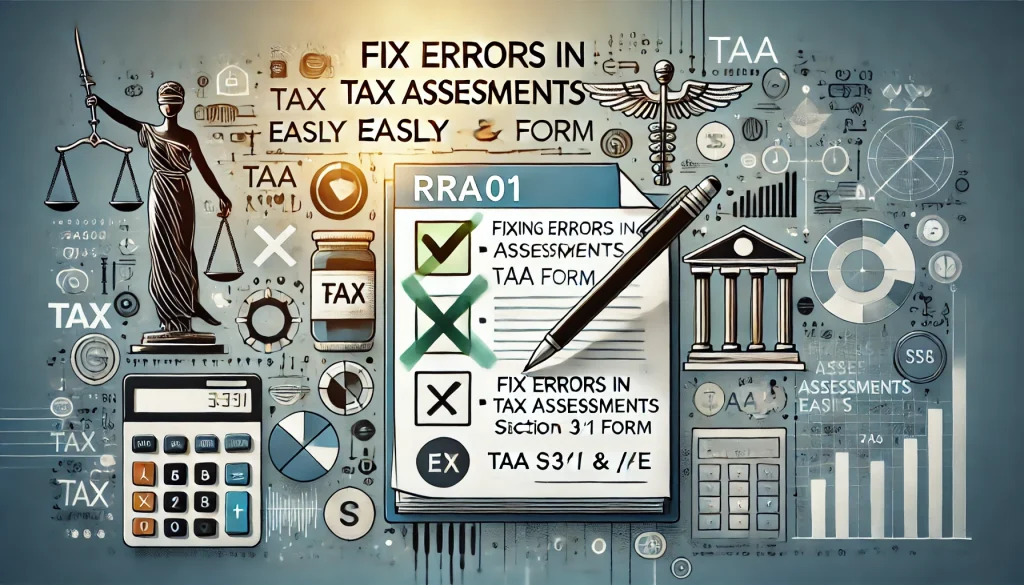
Reduced assessment due to undisputed error The South African Revenue Service (SARS) offers taxpayers a streamlined process to correct certain errors in tax assessments without resorting to formal objection and appeal procedures. This process, facilitated through the Request for Reduced Assessment (RRA01) form, allows taxpayers to request amendments to assessments to correct undisputed errors under specific sections of the Tax Administration Act (TAA). What is an Undisputed Error? An undisputed error, as defined under Section 93(1)(d) of the TAA, refers to a clear and obvious mistake in an assessment that both SARS and the taxpayer agree upon. These errors are factual, clerical, or typographical and are identifiable without requiring any legal interpretation or dispute over facts. Correcting these errors can be achieved without the need for a formal objection or appeal. Examples of undisputed errors include: Numerical or data entry mistakes in the taxpayer’s return. Clerical errors in the documentation submitted to SARS. Simple omissions that are not subject to differing interpretations (The correction does not involve any interpretation or legal argument, and there is no dispute over the facts.) When does undisputed error apply? Sections of the TAA Permitting Reduced Assessments SARS may reduce an assessment under the following sections of the TAA: Section 93(1)(d) – When there is a readily apparent undisputed error in: The return submitted by the taxpayer; or The assessment issued by SARS. Section 93(1)(e) – When SARS is satisfied that an assessment was based on: The failure of an employer or third party to submit a return; An incorrect return submitted by an employer or third party; A fraudulent return submitted by an unauthorized person; or A processing error by SARS. Important Considerations: Both sections require that the errors must be undisputed; if there is any contention or disagreement about the error, these provisions cannot be used. The application for these adjustments must be made within the prescribed period, typically three years from the date of the original assessment The Request for Reduced Assessment (RRA01) The RRA01 form provides a less formal mechanism for taxpayers to request SARS to amend an assessment, thereby reducing the assessment amount without going through the objection and appeal process. This option is particularly useful for quickly rectifying straightforward errors that do not involve complex legal disputes. Key Considerations for Using the RRA01 Form Limited Application: The RRA01 form does not replace the formal objection and appeal process but offers a less formal way to resolve errors that are readily apparent. It is only applicable under specific, limited circumstances where all requirements are met. Prescription Period: If an assessment has been prescribed (i.e., it is older than three years), an RRA01 in terms of Section 93(1)(d) will not be allowed. However, a separate RRA01 may be submitted under Section 93(1)(e) if applicable. Cases in Progress: If any of the following cases are in progress for the same assessment, a warning message will display, and the RRA01 form cannot be submitted until resolved: Revised Declaration Estimated Assessment Agreed Estimate Dispute Cases: If a dispute case is in progress for the same assessment, the RRA01 form can only be submitted after the dispute has been finalized. Active Audits or Requests for Relevant Material: If there is an active audit or a request for relevant material for the same year of assessment, the RRA01 form can only be submitted once these cases are finalized. JAWS Compliant: The RRA01 form is JAWS (Job Access with Speech) compliant, making it accessible to blind and visually impaired users. JAWS allows these users to read the screen using text-to-speech output or a refreshable Braille display, ensuring the RRA01 form on eFiling is fully accessible. Conclusion: The RRA01 form provides a valuable tool for taxpayers to correct certain errors in tax assessments without navigating the formal objection and appeal channels. By utilizing this form, taxpayers can address straightforward mistakes efficiently, ensuring that their tax affairs are accurate and up-to-date while minimizing the administrative burden on both themselves and SARS. However, it is crucial to understand the limitations and requirements associated with this process to ensure that the RRA01 is used appropriately. If you’ve identified an error in your tax assessment, don’t delay—utilize the RRA01 form for a quick and efficient correction process. Visit SARS eFiling today to submit your request and ensure your assessments are accurate. For guidance on completing the RRA01 form, or if you’re unsure whether your error qualifies, contact us for expert assistance.
Can SARS see all my bank accounts? Crucial Tips for the Tax Season
Can SARS see all my bank accounts? Stay Out of Trouble with SARS, Know how SARS Bank Account Access It is important to be vigilant and honest on your tax return. SARS has access to your bank accounts through third parties such as banks. SARS may raise additional assessments if they detect undeclared income, which can also attract penalties and fines. Take the time to ensure that your tax return is accurate and complete and that you have documents and records to support your claims. Respond promptly to SARS with any required explanations and documents. Utilize the dispute mechanism if you do not agree with additional or estimated assessments. Request a compromise or repayment plan if you cannot immediately settle your account with SARS. The 2024 tax season opens on the 15th of July 2024. From 1 July, SARS will start issuing auto assessments for non-provisional taxpayers. Here are a few things you need to know: Criminal Offences: The following actions or inactions relating to non-compliance may constitute a criminal offence and may attract criminal charges, penalties, and interest: Failing to register or notify SARS of a change in registered details. Failing or neglecting to register as a tax practitioner. Failing or neglecting to submit a tax return or document to SARS. Failing or neglecting to retain documents/records required by SARS under the Tax Administration Act. Submitting or making a false statement. Issuing an erroneous, incomplete, or false document. Pretending to be a SARS official. Steps to Stay Compliant: To avoid getting into trouble with SARS and the law, take the following steps: Check and ensure that your details (such as addresses, personal details, etc.) are recent and up-to-date on eFiling. If you provide tax services, ensure that you are registered as a tax practitioner and are compliant with the requirements of SARS and your controlling body. If you are a taxpayer, ensure you are using the services of a registered tax practitioner. Submit your tax returns on time. Keep records and documents that support your tax return and always ensure that your tax return is a true reflection of your income and deductions for the tax year under review. Common Questions: Does SARS have access to all my bank accounts? Yes, SARS can access your bank account information through third-party data providers like banks. Do banks report deposits to SARS? Banks are required to report certain deposits to SARS, which helps them verify your declared income. How does SARS verify your bank account? SARS verifies bank accounts by cross-referencing data from your tax return with information provided by banks. Who can see my bank account? Besides you and your bank, SARS can access your bank account details for tax compliance purposes. SARS Knows What’s in Your Bank Account: Some people believe they can hide information from SARS. However, it is in your best interest to declare all income you received during the year of assessment, as it is highly likely that SARS knows more about your finances than your spouse or family members do. In some developed countries, a taxpayer’s tax return is linked to their bank account. This way, the taxpayer is obliged to account for everything that happens in their bank account on their tax return. SARS is developing a similar system. SARS now requires certain taxpayers to explain why the revenue declared on their tax return does not match the deposits in their bank accounts. Unsatisfactory answers have led to additional estimated assessments and, in some cases, heavy penalties being imposed. For example, if a taxpayer declares R1.5 million on their tax return but the deposits in their bank accounts suggest a revenue of R5 million, the taxpayer must explain to SARS why the revenue collector should not raise additional assessments for the “under-declared income.” If you do not respond or do not supply adequate reasons as to why the deposits were not declared, or that they relate to loans and inter-account transfers, or potentially from other non-taxable income, then SARS may raise these assessments. How Does SARS Know What’s on Your Bank Statements? When you submit your tax return, SARS may request you to submit your bank statements as part of the supporting documents. Additionally, SARS has had access to taxpayers’ information from third-party data providers such as banks and other financial institutions since 2012. What Happens if You Do Not Agree with SARS Assessments? The burden of proof lies with the taxpayer. SARS has dispute mechanisms that can be used to challenge these assessments. These procedures often take time and may require supporting documents to support your claims. But SARS may require the taxpayer to reconcile amounts line by line and to explain each line with evidence. For example, why a deposit stands out, why it was made, and why it was not included in the taxpayer’s income. What if SARS is Correct but I Cannot Pay Them? It is important to note that SARS can instruct the taxpayer’s bank to deduct monies from an account and pay it over to SARS. Therefore, it is important for a taxpayer to approach SARS and request a compromise or a repayment plan if they feel they are not in a position to settle the amounts due. Ensure Your Compliance: Stay proactive and ensure your tax affairs are in order. Contact us today for expert guidance and support to ensure you stay compliant and avoid unnecessary penalties and stress. Let us help you navigate SARS requirements with ease. Leave a message/get a quote Subscribe now:
What if there is no response from SARS?
What if there is no response from SARS? KEY TAKEAWAY POINTS: SARS has 21 business days to complete a verification They may finalise it with or without changes If they take more than 21 business days, you have a right to lodge a complaint If nothing happens, you may take the matter up with the office of the tax ombud Remember to keep a proper track record of the matter and/or any follow-ups you make on the matter In this article, we discuss what verification is, what to do when you are selected for verification and if SARS does not bother to get back to you on time. INTRODUCTION: SARS has capacity issues that they are working hard to resolve, But, it seems this 2021 tax season they took more than what they can handle. We have observed many taxpayers who have been selected for verification but who have not heard back from SARS many days after the verification was initiated. Under normal circumstances, SARS has up to 21 working days to finalise a verification and issue a finalisation letter and/or final or adjusted assessment. In one case we have looked at, for example, the taxpayer who was selected for verification on 29 July 2021 has not heard back from SARS even at the time of writing this article. We are certain, she is not alone in this. Let’s look at some important definitions before we can consider what one must do if SARS takes their time on the verifications. What is verification? Being selected for an audit and verification are two different processes. With a verification, SARS is doing a face value verification of the information declared by the taxpayer on the declaration or in a return. This involves the comparison of the information on the return against the financial and accounting records and/or other supporting documents. All this is to ensure that the declaration/return is a fair and accurate representation of the taxpayer’s tax position. (Remember, in terms of the Tax Administration Act, the onus is on the taxpayer to provide supporting documentation to prove that the deductions and information on their declaration are reasonable, fair and accurate.) Who can be selected for verification? Any taxpayers can be selected for a verification process for the proper administration of tax. The selection can also be done on a risk basis. What should you do if you are selected for verification? What should you do if I am selected for verification? SARS will notify the taxpayer if they have selected them for verification. The letter issued will state what the taxpayer must do or provide to SARS. The letter will also notify the taxpayer to check their tax return and to make any corrections if there are any discrepancies on their tax return. The taxpayer will be given 21 business days from the date of the letter in which to provide the supporting documents and schedules. These documents and schedules can be submitted via eFiling or SARS support documents portals. During the verification, you can expect to get another letter requesting additional information if the relevant material initially supplied was not sufficient to finalize the verification. If you are due for a refund, you may not get this until the verification process is finalised. What happens if you do not respond to the verification? It is always important to keep an eye out for SARS correspondences on your email or eFiling. Normally SARS sends you a message and email when they have issued important notices. If you choose not to respond SARS may: Issue a second letter reminding you to submit relevant information Issue a final request for relevant information If you still do not respond, a SARS official will contact you telephonically and request that you submit the necessary relevant material within 5 business days. Should you still not respond, SARS may raise an assessment based on information readily available or obtain from a third party. Now let’s consider what your options are if SARS ghosts you. What if you have complied/responded but SARS takes all the time in the world on the verification? There is the office of the tax ombud that can help with operational issues. But, it does not get involved before you have exhausted all internal SARS complaints mechanisms. You can only go directly to the office of the tax ombud only if there are compelling reasons to do so. So, the first step to take is to complain to the SARS complaints office. To do so, you must be sure that the matter is now outside the normal service period, as in the example we have earlier about the taxpayer who was selected for verification on 20 July and has not yet back from SARS ever since. There are three ways through which one can complain about SARS: Via eFiling. See the step-by-step guide on how to complain about eFiling. Please note that you have to be registered on eFiling to be able to do this. You may not download or print the form to send it by any other means. You must also have a valid case number to which your complaint relates. By visiting the branch. If you do, you may need to ensure that you have spoken to all relevant higher people before you leave the branch. Due to COVID, you may need to make an online appointment. By calling the SARS Complaints Management Office (CMO) on 0860 12 12 16. Do not call the call normal call centre and say you are following up on an unresolved matter, the call centre agents may “escalate” your case and normally that achieves very little. If your complaint is not resolved after 21 working days, you may take the matter to the office of the tax ombud. Here are a few tips on winning the battle against SARS poor service/administrative issues and making sure you have a winnable case when you approach them or the Tax Ombud: Be
Tax season deductions: Basic deductions you can use to save on tax (how to get a tax refund)

Tax season deductions – what you should know The tax season is offically coming to an end for non-provisional taxpayers in the next few days. But, even if you are planning for the next tax season, this article is for you as it will consider a few options/deductions that you can use to reduce your tax liability. Let’s consider these: Medical aid credits: Taxpayers can claim deductions (or tax credits) for medical aid schemes they contribute to. This can be applied where you contribute as a principal member or where you are not a principal member but pay for and on behalf of someone like a close family member. The credits depend on the number of beneficiaries of the medical aid. The more the beneficiaries the more the credits one can get. For the taxpayer or the first beneficiary, the tax credit is R332 for the 2022 tax year (R319 – 2021), R664 for the taxpayer and one dependant (2022 or 638 for the 2021 tax year and R224 for any additional beneficiary (215 for the 2021 tax year.) Retirement annuity: If you make contributions towards a pension, provident fund or retirement annuity, you can also claim deductions on taxable income. Taxpayers are allowed to deduct up to, from their taxable income, 27.5% of their remuneration of taxable income, whichever is greater, up to a maximum of R350 000 per tax year if they contributed to a retirement annuity fund, pension or provident fund. Therefore, it is important that the taxpayer examines and calculate their annual contribution in order to fully take advantage of this tax benefit. However, there is no tax benefit once you withdraw from this fund (we will talk about withdrawals in another publication.) Donations: The taxpayer can also claim donations against his/her taxable income. There is a catch though. The deduction is limited to 10% of the taxpayer’s taxable income before claiming donations as a deduction (so, if the taxable income is R300 000, the claim cannot be more than R30 000.) The charitable organisation the taxpayer gives a donation to must also furnish the taxpayer with a Section 18A certificate, not just a receipt. Home office expenses. We have previously written about home expenses here. So, if you need a more detailed guide, please refer to that article. However, let’s cover a few things here too. Certain expenses that a taxpayer incur as a result of working from home can be claimed as a deduction against taxable income provided certain conditions are met: The employer must allow the taxpayer to work from home. So, you can’t just work from home because you want to. Your employer must give you express permission to work from home. The taxpayer must spend more than half (50%) of their total working hours working from their home office. The part of the home in respect of which a claim is submitted must be occupied for purposes of a “trade”, as defined in section 1. So, in essence, there should be a specific part of the home that is used exclusively for this purpose. As an example, a specific set aside office must be kept aside for the trade. A taxpayer meeting with a client in the bar area of their home may not qualify for these deductions. Building from the point above, the part that is so occupied must be specifically equipped for purposes of the trade. So, it is important that the space/office must be specially fitted with the relevant instruments, tools and equipment required for the taxpayer to perform their work. The part must be regularly and exclusively used for purposes of the trade. As an example, taxpayers who earn a commission but who spend the majority of their time on the road visiting clients and performing their work at the client’s premises do not qualify for home office expense deduction. Refer to our previous article on home office expenses for further details and examples of expenses that a taxpayer can get as a deduction for working from home. Tax-free investments: These accounts are offered by various financial institutions. The tax benefit is that any income (interest, dividends, REIT payments and capital gains) accrued or received from these funds are exempt from tax. For example, interest income earned is fully exempt from tax as opposed to interest earned elsewhere, which can be exempt only up to certain amounts as per the Act. Though the income is exempt, this must still be included on the taxpayer’s tax return. Contributions to these funds should not exceed R33 000 annually and a lifetime agreement of R500 000. Any contribution above these amounts triggers a tax on the income earned. Foreign income: Ever heard f the 183 days rule? Individuals working overseas for a 183-day term could claim back tax deductions on income earned for the period there were outside the Republic. After 1 March 2020, the exemption is the first R1.25 million of foreign employment income earned by a resident will qualify for an exemption for tax years commencing on or after 1 March 2020. Travel claim: If you use your vehicle for work purposes and you are able to prove to SARS that you used your vehicle for work purposes, then you can claim a deduction on it. The catch, keep a travel logbook. Do not “manufacture one!” Wear and tear: The world is changing and often employees will use their own tools and equipment to carry out their work. If you are using goods/tools that you bought with your money for work purposes you are entitled to claim depreciation on these tools/assets. These can be computers or laptops. The catch, the cost of the assets must be written off over a time stipulated by SARS and you must be able to prove that the asset/tool was used for work purposes. For example, computers are written off over a period of 3 years. Assets that cost less than R7000 can be written off in full in the
Credit notes under scrutiny, are you complying?
What we have seen now is increased scrutiny of credit notes for compliance with the VAT Act. The main challenge is that in most instances accounting packages being used by businesses do not contain all the information required on a credit note by the VAT Act. It is therefore important that businesses and accountants ensure that credit notes comply with the Act before they are issued and before VAT claims are submitted. Otherwise, it will be difficult for businesses to get back their legitimate VAT claims. Key elements that must be found on the credit note are the following: Vendor details (names and addresses, VAT registration numbers for both the issuing and receiving party) The words “credit note” must be clearly stated on the document being issued A brief description of the circumstances that gave rise to the credit note. Now this one is critical and what you may find is that some accounting systems do not allow for this. We would encourage you to add this narration to the description part of the credit note. Information sufficient to identify the original transaction to which the credit note relates, that is the original invoice that is being credited. In other words, if someone else who is not familiar with your records comes to check the credit notes, they should be able to trace its origins with ease. It would also be very important to make sure that the correct VAT rate is applied. If the original invoice was issued before the VAT rate changes to 15%, then the credit note should also be at 14%. One cannot claim back more than what they declared. In more detail and in terms of Section 21(3), of the VAT Act, a credit note must contain the following particulars: (i) The words “credit note” in a prominent place; (ii) the name, address and VAT registration number of the vendor; (iii) the name, address of the recipient. And where the recipient is a registered vendor, the VAT registration number of the recipient; (iv) the date on which the credit note was issued; (v) either— (aa) the amount by which the value of the said supply shown on the tax invoice has been reduced and the amount of the excess tax; or (bb) where the tax charged in respect of the supply is calculated by applying the tax fraction to the consideration, the amount by which the consideration has been reduced and either the amount of the excess tax or a statement that the reduction includes an amount of tax and the rate of the tax included; (vi) a brief explanation of the circumstances giving rise to the issuing of the credit note; (vii) information sufficient to identify the transaction to which the credit note refers; (b) the actual tax charged in respect of the supply concerned exceeds the tax shown on the tax invoice as charged, the supplier shall provide the recipient with a debit note, containing the following particulars: (i) The words “debit note” in a prominent place; (ii) the name, address and VAT registration number of the vendor; (iii) the name, address and, where the recipient is a registered vendor, the VAT registration number of the recipient, except where the debit note relates to a supply of goods in respect of which a tax invoice contemplated in section 20 (5) was issued; (iv) the date on which the debit note was issued; (v) either— (aa) the amount by which the value of the said supply shown on the tax invoice has been increased and the amount of the additional tax; or (bb) where the tax charged in respect of the supply is calculated by applying the tax fraction to the consideration, the amount by which the consideration has been increased and either the amount of the additional tax or a statement that the increase includes an amount of tax and the rate of the tax included; (vi) a brief explanation of the circumstances giving rise to the issuing of the debit note; (vii) information sufficient to identify the transaction to which the debit note refers: Provided that— (A) it shall not be lawful to issue more than one credit note or debit note for the amount of the excess; (B) if any registered vendor claims to have lost the original credit note or debit note, the supplier or recipient, as the case may be, may provide a copy clearly marked “copy”; (C) a supplier shall not be required to provide a recipient with a credit note contemplated in paragraph (a) of this subsection in any case where and to the extent that the amount of the excess referred to in that paragraph arises as a result of the recipient taking up a prompt payment discount offered by the supplier if the terms of the prompt payment discount offer are clearly stated on the face of the tax invoice. Did you just get VAT registered and you need someone to configure your accounting system for VAT? Leave a message Subscribe now:
How to hold SARS accountable
How to hold SARS accountable The office of the Tax Ombud was established to act as a bridging gap between SARS and the taxpayer. But, taxpayers do not always have a direct line to connect with the Tax Ombud. A taxpayer may lodge a complaint with the Tax Ombud after they have exhausted all the SARS complaints mechanisms, unless there are compelling circumstances for not doing so. There are three ways through which one can lodge a complaint with SARS: Via eFiling. See the step-by-step guide on how to lodge a complaint via eFiling. Please note that you have to be registered on eFiling to be able to do this. You may not download or print the form to send it by any other means. By visiting the branch. If you do, you may need to ensure that you have spoken to all relevant higher people before you leave the branch By calling the SARS Complaints Management office (CMO) on 0860 12 12 16. Here are a few tips on winning the battle against SARS poor service/administrative issues and making sure you have a winnable case when you approach them or the Tax Ombud: Be specific: If you have a complaint, it is better to call the Complaints Management Office (CMO.) If you call SARS contact centre to get a reference number, specify that it is a complaint with a complaint, specify that it is a complaint and not a follow-up. If you keep calling the call centre and saying you are following up, it may remain just that, a follow-up. You need to specify that you have a complaint so that it is treated as one. Some complaints will need case numbers, make sure you call the contact centre to get one. Try again: Sometimes, a complaint lodged on eFiling may be rejected for one reason or the other. If you feel you have a compelling case, pick up the phone and call the CMO so that they may record and lodge the complaints on your behalf. You may also call them if you are not sure how the process works on eFiling or if you are too far from a SARS office. For example, I once lodged a complaint about a delayed refund (because refunds should be paid 7 workings days after verification or audit is finalised) but the system kicked me out and rejected my complaint. The complaint was successfully lodged after calling the CMO. Build a compelling case: The most important thing to do when dealing with SARS is to build a good case, this is whether you are raising a complaint, an appeal or an objection. You will need a system to record your interactions with SARS (at each touchpoint with them). You also need to store documents and supporting documents relevant to the taxpayer’s case. The system of recording your interactions with SARS should allow you to build a timeline of how the case is developed and to ensure that you have all the documents you need for this case. One such system is to make sure each client file/folder contains relevant subfolders that will help you gather the important and necessary information. The other is to build a dashboard that records the timeline and communications with SARS. This can take any form, for example, Word or Google docs, a task management tool like Asana, Trello or Monday.com. NB: You do not do this because something has gone wrong, but because things may go wrong and often they do go wrong. The advantage of doing things this way is that you will save yourself a lot of time when doing the actual complaint, even an appeal or objection. The Tax Ombud form will ask you to summary your case in chronological order. So, if you had been building a case over time, this process will be a breeze. You have all the facts and timeline at your fingertips. Are you frustrated with the way SARS has handled your affairs? How can we help you? Leave a message Subscribe now:
How to avoid or reduce the risk of a SARS audit
How to avoid or reduce the risk of a SARS audit By now we all know that SARS is looking to raise more tax revenue to make up for revenue collection shortfalls. This means SARS may and will do all they can to increase revenue collections. It will not be surprising to find that SARS audit teams will target taxpayers in order to raise additional income. Besides, their systems are designed to pick up “discrepancies” on a taxpayers’ return and these can easily trigger an audit. So do not be surprised if, a few days after submitting, you get a notification from SARS saying you’ve been selected to submit your supporting documentation for inspection or even that you have been selected for a full audit. At Eva Financial Solutions, we have a team of dedicated and diligent tax practitioners working around the clock to ensure that you do not pay a single cent more that what you should legally pay over to SARS. We have designed our internal processes, checks and balances to ensure that, even if the audit comes, our clients can avoid an audit or the process goes smoothly without causing them unnecessary emotional stress. Here are a few tips: Always ensure that your tax affairs are up to date and that you have filed all tax returns as they fall due. SARS has now made it easy to check your tax compliance status online. You should always check that your tax status is green (compliant). Once you have picked up that you are not compliant seek to address the issues sooner rather than later or consult your tax practitioner for help. You should always come clean with the taxman before being audited. Once the audit has started, you are prevented from claiming the relief under section 227 of the TAA for coming clean. Before you submit your return, ensure that you have all supporting documents for every income and deductions on your return. If you kept a personal data room, by the time your return is due you would have gathered all the necessary supporting documents for your tax return (Medical aid, Travel logbooks, Interest and Dividends certificates etc.). Be warned, do not convince yourself that if you ignore SARS’ requests for documents long enough, it will just go away. Always have your house in order. If you own and run a business as a sole proprietor or have a rental property, ensure that you do not include and deduct your personal expenses. Chances are that an ordinary taxpayer will struggle to interpret various tax laws or will misinterpret certain SARS requests or requirements. Therefore, always use the services of a reputable tax practitioner or accounting firm. Eva Financial Solutions can assist you in this regard, contact them if you cannot get your own personal tax practitioner. After submitting your return log into (or at least ask your tax practitioner to do so) SARS at least a few more time to check if SARS hasn’t issued any sneaky notifications that require your attention. If your email address and not that of your tax practitioner is linked to your profile, alert your tax practitioner if and when you receive any kind of notification from SARS. When it comes to VAT, these tips might be helpful: When you get VAT registered ensure that you have sent your VAT number to all your suppliers so that they may update their databases and add your VAT numbers onto your invoices. Insist on getting a valid tax invoice from all your suppliers. When you receive a tax invoice, check that it meets all the requirements of a valid tax invoice Check that the new VAT rate of 15%, and that the total price (including VAT) is correctly calculated before accepting the invoice/quote. Before you submit your VAT return: Check that you have claimed only where you are supposed to claim VAT (for example, you may not claim on motor car (passenger vehicle) rental or entertainment expenses as defined and other zero-rated or tax-exempt supplies. Check that you have applied the correct tax types/rates to each transaction, for example, Zero-rated sales cannot be classified as tax-exempt. Ensure that each tax type is correctly populated on the VAT201 return. Check that you have declared all standard rated sales (Sales VAT at 15%) that you should have declared and have done so using the correct VAT tax rate. Perform turnover VAT reconciliation at each VAT return submission. This will always ensure that your income statement turnover matches your VAT return submission. This will also reduce the risk of an IT14SD and the time it may have to take you if you did this only because SARS asked you to do an IT14SD. Remember, SARS systems are designed to pick up discrepancies between your VAT return submissions and your annual income tax return turnover. Before you hit submit, ensure that the VAT201 is correctly populated and the amounts contained are correct and matches your now correct VAT reports. Remember, once submitted you can only increase not reduce the amount payable. Take care that cash register slips and tax invoices issued from 1 April 2018 reflect the correct VAT rate. This will generally be 15% unless a specific time of supply rule or a rate specific rule applies. VAT vendors issuing debit or credit notes from 1 April 2018 must ascertain that the correct VAT rate is reflected and applied when determining the VAT amount. Debit or credit notes will generally reflect the old VAT rate of 14% where it relates to supplies of goods or services before 1 April 2018, subject to certain exceptions. Similarly, debit or credit notes relating to supplies made after 1 April 2018 must reflect the new rate of 15%. If your accounting systems allow, ensure that you immediately lock the submitted periods so that no further changes are effected to a closed VAT period. Ask a question or leave a message for us below: Leave a message Subscribe now:
Owing SARS, what are your options?

If you follow our posts, you will have come across one of my articles that dealt with the approach SARS has taken to deal with the non-submission of a tax return. This is a follow-up to this article. So now you read that SARS will prosecute you for non-submission and charge you an R5 600 fine if convicted (of course, you will be convicted because there is overwhelming evidence against you/your company that you did not submit a few tax/vat returns.) You then went on to submit all your outstanding returns but you now owe SARS large sums of money. Taxpayers are required to be fully compliant in all their tax matters by submitting and paying their taxes on time. If taxpayers are not compliant or have outstanding tax debt the SARS Debt Management Department is committed to assisting businesses and individuals to become fully compliant. There are a few avenues that SARS uses to assist in this regard. How much do I owe? If you are not 100% certain how much you owe SARS, you will need to contact their call centre to enquire about your outstanding balances. If you stay not far away from a SARS branch, a visit to the SARS branch would not kill you. When you visit, just ensure you have all your particulars with you to avoid being turned away. Lastly, if you were registered for e-filing, run a statement of account to see how much you owe SARS. Your next step is to make the outstanding payment to SARS. Contact SARS or your tax practitioner to help you load a payment that can then be released from your bank account. What if I can’t pay the outstanding amount now? Every taxpayer must be aware that it is best practice to always file a tax return on time in order to avoid penalties and interest. But, if you are currently unable to pay your taxes, please contact SARS without delay. The following options may be available to you: Payment arrangements: Under certain circumstances, SARS can reach an agreement with a taxpayer to defer a tax debt for later payment or for payment by instalments. A deferred payment arrangement is s when a taxpayer can not settle the full amount owing to SARS immediately and want to apply for a payment plan to settle the debt. Under this option: SARS has the option to decline the request. Interest will accrue on any unpaid debt. If you don’t adhere to the conditions of the payment arrangement the payment agreement will be terminated and normal collection proceedings will resume. The taxpayer must suffer from a deficiency of assets or liquidity, which is reasonably certain to be remedied in the future. Notwithstanding this deficiency, the taxpayer must anticipate that there will be income or other receipts which can be used to satisfy the tax debt. At the time of concluding the agreement, the prospects of collecting the tax debt must be poor or uneconomical, but likely to improve in the future. Moreover, the deferral should not prejudice the collection of the tax debt 2. Compromise agreement: In certain circumstances, a compromise may be requested on taxpayers’ outstanding tax debt. A SARS Debt Compromise is a process whereby a taxpayer requests that SARS permanently “write off” a large portion of their debt, with the balance being paid in full by the taxpayer immediately on the condition that the taxpayer complies with any conditions as may be imposed by SARS. A compromise cannot be considered if the taxpayer disputes the debt. Therefore while a matter is under objection or appeal, a compromise cannot be considered. If the taxpayer wants to compromise he has to withdraw his objection or appeal. What if you do not agree with the debt? If you are not in agreement with your tax debt, you may lodge a dispute. To lodge a dispute please go to objections and appeals. Even though you are disputing the tax debt you remain under obligation to pay the debt whilst your dispute is being handled. Why you should consult Eva Financial Solutions if you need a debt arrangement or compromise We deliver on our promise Compromise solutions are difficult to obtain For this reason, it is important that it is handled by qualified and dedicated tax practitioners. We have a team of experts who will always work to get the best result. Leave a message Subscribe now:
Can I deduct home office expenses?

Can I deduct home office expenses? These days the work culture has changed. Since lockdown was introduced. Some companies had to close shop and some employees were required to work from home. Also and in general, the world is changing and so is the way people work and interact. Many people, like myself, prefer working from home. Working from home has become a normal thing. The GIG economy will also make working from home just another normal thing. Luckily, SARS allows home office deductions if certain conditions are met. However, it is important to note that SARS often than not flag returns with home office expenses for audit. So it is important that one correctly and accurately claims these deductions. It is worth understanding the rules around home office expenses as they are allowed under certain circumstances. Not everyone may end up deducting home office expenses. Having said this, it is important to point out that the situation is different for self-employed people or what we would term sole proprietors or freelancers who work from home. These taxpayers can automatically deduct their home office expenses. These taxpayers (self-employed, sole proprietors, freelancers) do not need to work through the tight conditions required for one to be able to deduct home office expenses. They simply have to include their home office expenses with the local business, trade and professional income on their tax return. What is required to be able to deduct home office expenses? The employer must allow the taxpayer to work from home. So, you can’t just work from home because you want to. Your employer must give you express permission to work from home. The taxpayer must spend more than half of their total working hours working from their home office. The part of the home in respect of which a claim is submitted must be occupied for purposes of a “trade”, as defined in section 1. So, in essence, there should be a specific part of the home that is used exclusively for this purpose. As an example, a specific set aside office must be kept aside for the trade. A taxpayer meeting with a client in the bar area of their home may not qualify for these deductions. Building from the point above, the part that is so occupied must be specifically equipped for purposes of the trade. So, it is important that space/office must be specially fitted with the relevant instruments, tools and equipment required for the taxpayer to perform their work. The part must be regularly and exclusively used for purposes of the trade. As an example, taxpayers who earn a commission but who spend the majority of their time on the road visiting clients and performing their work at the client’s premises do not qualify for home office expense deduction. What expenses can be deducted? First, one needs to check the taxpayers’ remuneration structure to see if they are: A commission earner, that is, takes more than 50% of their total remuneration from the commission or some other variable form which is based on their performance. A normal salaried employee with variable payments/commission making up less than 50% of their total remuneration. The commission earners can deduct the following: Rent Interest on bond Repairs to premises Rates and taxes Cleaning Internet Wear and tear and All other expenses relating to their house as well as other commission related business expenses (such as telephone, stationery, repairs to printers, maid answering phone in your absence etc) The salaries employee with variable payments/commission making up less than 50% of their total remuneration can deduct: Rent of the premises Interest on the bond Cost of repairs to the premises and other expenses in connection with the premises Rates and taxes Cleaning Internet, Wear and tear and all other expenses relating to their house only. How to calculate the home office deduction: One would need to work out/measure the total square meterage of the office in relation to the total square meterage of the house. This is then converted into a percentage. The percentage is then used to apportion the expenses that can be used for home office deductions. Example: Mrs taxpayer is a software engineer who works for Corona Company Pty Ltd. Her remuneration consists of a salary only (no commission.) Her Company allows her to work from home three days per week. Mrs taxpayer has a separate office at home, fitted out with a computer and printer, which she uses exclusively for her software engineering job. Her office is 30 square meters, and the floor space of her entire home (including the office) is 300 square meters. During the tax year, she incurs the following expenses: – R120, 000 interest on a bond – R36, 000 rates and electricity – R36, 000 paid to the cleaner – R5, 000 roof repairs – R12, 000 cell phone expenses Based on the above information, Mrs taxpayer qualifies for home office deduction. Based on the space occupied by her home in relation to the entire house, the apportionment ratio is 10% (30/300). Therefore her home office deduction is 10% x (120 000 + 36 000 + 36 000 +5 000) = R19 700. Her cell phone costs will not be deductible since she is not a commission earner. Will I qualify for a home office deduction for the 2021 tax season? The 2021 tax season started 1 March 2020 and ends 28 Feb 2021. To be able to claim home office expenses you would need to have met the conditions specified earlier. You will also need to have ended up working from home for more than six months of the tax year. That is, you would have worked from home until at least the end of September 2020. Need help claiming your home office expenses or finding someone who can deal with SARS on your behalf? Leave a message Subscribe now: