Influencers and Freelancers: How to Stay Tax-Compliant with SARS

Influencers and Freelancers: How to Stay Tax-Compliant with SARS As social media continues to grow as a source of income, the South African Revenue Service (SARS) has increasingly turned its attention to influencers and freelancers who earn through online platforms. While many start creating content as a hobby, once it generates revenue, SARS considers it taxable income. Understanding your obligations is critical to avoid penalties. Income Isn’t Just CashMany influencers and freelancers underestimate what constitutes taxable income. It’s not only cash payments; sponsorships, brand deals, free trips, products, meals, or other perks received in exchange for content are included in gross income if there’s a contractual or agreed-upon promotion. For instance, a free gadget or a stay at a luxury lodge given with the expectation of a review is considered income by SARS. Full-time employees may see such perks reported as fringe benefits via payroll, whereas independent contractors must declare them directly in their tax submissions. Misunderstandings are common, with many treating these benefits as gifts. However, SARS clarifies that any income earned, whether in cash or kind, must be declared. Freelancer Tax DeductionsOn the positive side, freelancers and influencers can claim tax deductions for expenses directly related to earning income. Examples include: Equipment Costs: Cameras, microphones, lighting, and laptops used for content creation. Workspace Expenses: Home office space proportion, internet, utilities. Travel and Transport: Trips to events, meetings, or shoots for content creation purposes. Marketing Costs: Advertising, domain names, and hosting fees for websites or blogs. Professional Services: Accountant fees, tax practitioner fees, and business advisory consultations. Deductible expenses reduce your taxable income, potentially lowering your overall tax liability. Keeping detailed records and receipts is essential, as SARS may request supporting documents in the event of an audit. Why Compliance MattersSARS is actively enhancing its systems and using technology to detect undeclared income. Companies issuing sponsorships and perks are required to report marketing spend, which SARS can cross-reference with reported income. Non-compliance may trigger penalties, interest, and audits. For freelancers, independent contractors, and influencers, being proactive is crucial. Ensure all income, cash or non-cash, is reported, and legitimate business-related expenses are documented. Engaging a registered tax practitioner can help navigate the rules, maximise deductions, and reduce the risk of errors or penalties. Steps to Stay Tax-Compliant Track All Income: Include cash payments, bank transfers, and non-cash benefits received for services or promotional activity. Keep Receipts and Records: For any deductible expenses, maintain invoices, receipts, and contracts. File Accurate Tax Returns: Declare all income and claim legitimate expenses each tax year. Consult Professionals: When unsure about deductions or income classification, seek guidance from a tax practitioner. Plan Ahead: Use tools or software to monitor income streams and estimate tax liabilities to avoid surprises. Final ThoughtTax compliance isn’t optional — it’s essential for freelancers and influencers to build a sustainable career. While SARS has clear rules, many still misunderstand the scope of taxable income. By properly tracking income, claiming allowable deductions, and seeking professional guidance, you can focus on growing your business while avoiding unnecessary penalties.
Why Paying for a Tax Practitioner Makes Sense — And Why am I not getting my refund?

Why am I not getting my refund? When tax season rolls around, many individuals wonder:“Should I pay someone to do my tax return?” and “And why am I not getting my refund?” Let’s unpack both questions — because the truth is, tax returns aren’t just about refunds. They’re about compliance, accuracy, and peace of mind. Why You Should Pay a Registered Tax Practitioner Here are some of the biggest benefits of working with a qualified tax practitioner: 1. Save Time and Hassle Even with SARS auto-assessments, things aren’t always simple — especially if you have multiple income streams (salary, rental, freelance work), medical expenses, or travel deductions. A tax practitioner will help you gather the right documents, complete submissions accurately, and deal with any audits or verifications as well as identify any potential tax savings for the current or future tax retuns. 2. You Don’t Know What You Don’t Know Tax law changes every year. Practitioners stay up to date on SARS changes, new deductions, and allowances — so you don’t miss out. They also know how to correctly claim allowable deductions, such as: Home office claims Retirement annuities Medical aid and out-of-pocket expenses Donations to approved PBOs Travel deductions on logbooks 3. Avoid Mistakes that Cost You Submitting incorrect or incomplete returns can lead to: Delays in refunds Audits or verification requests Penalties and interest Jail time Practitioners know how to submit your return properly — avoiding costly mistakes. 4. Representation if SARS Queries You If you’re selected for review or audit, a tax practitioner can correspond with SARS on your behalf and resolve the issue faster — saving you time and frustration. Why Not Everyone Gets a Tax Refund Many taxpayers mistakenly believe that submitting a return automatically means they’ll get money back. The truth is: you only get a refund if you overpaid tax or qualify for specific tax credits or deductions. Otherwise, SARS may calculate that: You’ve already paid the correct amount of tax (no refund) You underpaid tax (you’ll need to pay in more) Let’s break this down. When Might You Get a Refund? You may qualify for a refund if: ✅ You contributed to a retirement annuity✅ You paid medical aid or out-of-pocket medical expenses and qualify for credits✅ You earned commission or travel income and kept a valid logbook✅ You made donations to registered PBOs✅ You changed jobs and the employer over-deducted PAYE✅ You had a low income with high tax credits Real-World Example Let’s say Thando earns R20,000/month and contributes R3,000/month to a retirement annuity (RA), and her employer deducted PAYE based on full salary. Over the year, she contributes R36,000 to her RA. This qualifies her for a tax deduction (limited to 27.5% of taxable income, up to R350,000). SARS recalculates her taxable income and sees she overpaid tax. She gets a refund based on her RA contributions. Now compare this to Siya, who earns the same but has no RA, no deductions, and paid exactly the tax required. No refund — but also, no problem. He fulfilled his tax obligation. Not Every Cent of PAYE is Refunded — And That’s Okay PAYE (Pay-As-You-Earn) is a provisional payment toward your annual tax. But it’s not a deposit waiting to be refunded. It’s how South Africans pre-pay their tax obligations during the year. Only when PAYE exceeds your actual tax liability — due to rebates or deductions — do you get a refund. Otherwise, SARS keeps the tax that’s due, just like you pay for electricity, rent, or school fees. Let’s say Thando paid PAYE of R57 000 over the year, and when the tax is recalculated, after other income, rebates and credits, Thando’s tax liability is R58 950. Thando will not get a refund but will owe SARS R1 950. Other reasons why you may not be getting your refund on time: 🔁 1. Banking Details Not Verified If your banking details have changed or have not been verified on SARS eFiling, your refund cannot be processed. SARS may also request supporting documents to verify your account. 📄 2. Outstanding Returns SARS may withhold your refund if you have outstanding tax returns for previous years — even if your current return is correct and due for a refund. 🔎 3. Verification or Audit in Progress If SARS has selected your return for verification or audit, the refund will be held back until the process is complete. This is common if there’s a significant refund or unusual deductions claimed. ⚖️ 4. Administrative Penalties Owed SARS can set off your refund against penalties or interest you owe (e.g. for late submissions or late payments). Even if you’re unaware of the penalties, the refund can be reduced or withheld. 🚫 5. Taxpayer Not Tax Compliant If you are flagged as non-compliant (e.g. due to missing information, late submissions, or incorrect registrations), SARS may pause your refund until the issue is resolved. 🏦 6. Refund Reconciled Against Other Taxes SARS may automatically offset your income tax refund against other tax debts — like VAT, PAYE, or Provisional Tax — under the set-off provisions in the Tax Administration Act. 👨🏽💻 7. Return Submitted Manually or Incorrectly Errors made during manual submissions (or outdated versions of eFiling returns) may cause SARS to halt the refund until corrections are made. 📤 8. Pending Supporting Documents If SARS has asked for supporting documents (e.g. medical aid certificates, RA contributions, logbooks), and you haven’t uploaded them, the process pauses until you respond. 🔒 9. Security or Fraud Checks To combat fraud, SARS may flag your return for further identity or income verification, especially in cases where refunds are large or suspicious activity is detected. 🧾 10. Employer or Third-Party Data Mismatch If your IRP5, medical aid certificate, or other third-party data submitted to SARS doesn’t match your return, the system may auto-flag it for verification or adjustment. Click here to find out what you can do to get your refund quickly In Summary: Why It Pays to Get Help
2025 Tax Return Guide – A Simple Guide to Completing Your 2025 Tax Return

2025 Tax Return Guide The 2025 tax season is in full swing, and many South African taxpayers are faced with the annual task of completing their ITR12 income tax return. Whether you’re a salaried employee, sole proprietor, or investor, the ITR12 is your official declaration of income, expenses, and allowable deductions to the South African Revenue Service (SARS). Submitting it accurately is essential—not only for compliance but to ensure you receive any potential refunds and avoid penalties. This article, based on SARS’s official external guide, explains what the ITR12 is, who needs to submit it, and how to navigate the process smoothly. What is the ITR12? The ITR12 is an income tax return for individuals in South Africa. It’s used by SARS to assess whether you’ve paid enough tax for the relevant assessment year (e.g., March 2024 – February 2025), or if you owe additional tax—or are due a refund. You must complete and submit the ITR12 if: You earned multiple income sources (e.g. salary and rental income), You earned more than R500,000 from one employer and received travel allowances or other benefits, You have capital gains, foreign income, or investment income over the thresholds, You run a business or trade as a sole proprietor. What You’ll Need to Complete Your ITR12 SARS recommends gathering all necessary supporting documentation before completing the return. These may include: IRP5/IT3(a) employee tax certificates, Medical aid contribution certificates, Retirement annuity fund certificates, Proof of donations to SARS-approved PBOs, Rental income and expense records, Travel logbooks and vehicle details (if you receive a travel allowance), Investment income certificates reflecting interest, dividends, and capital gains. Additionally, SARS may auto-populate some of this information in your return if it has been submitted by third parties (e.g. employers, medical schemes, or banks). However, it remains your responsibility to verify and correct the information before submitting. Key Sections in the ITR12 Form The ITR12 return is tailored to your personal tax profile. When accessing it on eFiling, SARS will display only the applicable sections based on your registration data. Key sections include: Income earned (employment, rental, foreign, and investment income), Deductions (retirement contributions, medical expenses, donations), Capital gains and losses, Foreign tax credits (if applicable). If your tax situation has changed during the year, it’s essential to update your personal information and tax product registration on SARS eFiling to reflect these changes and ensure the form is accurate. Tips for Completing and Submitting the ITR12 Use eFiling or the SARS MobiAppThese platforms provide the most efficient way to file. They automatically reflect your pre-loaded data and perform real-time validation. Review Auto-Assessments CarefullyIf SARS has pre-assessed your return and you accept it without review, you forfeit the opportunity to correct errors or add overlooked deductions. Respond to Verification Requests PromptlyIf SARS selects your return for verification, provide the requested documentation within 21 business days to avoid delays or penalties. Don’t Miss the DeadlineNon-provisional taxpayers usually have until November to file, while provisional taxpayers have until end-January. Penalties apply for late submissions. Final Thoughts Completing your ITR12 may feel daunting, but with proper preparation and access to SARS’s tools and resources, it becomes manageable. The key is to be proactive: gather your documents early, verify your information, and ask for help if you’re unsure. At Eva CFO t/a Eva Financial Solutions, we assist individuals and business owners with accurate and compliant tax submissions—so you can have peace of mind. We are professional registered Tax Practitioners dedicated to making your filing experience simple and seamless. Contact us today if you need help with your tax return.
Tax-Free Savings Accounts (TFSA): What You Need to Know
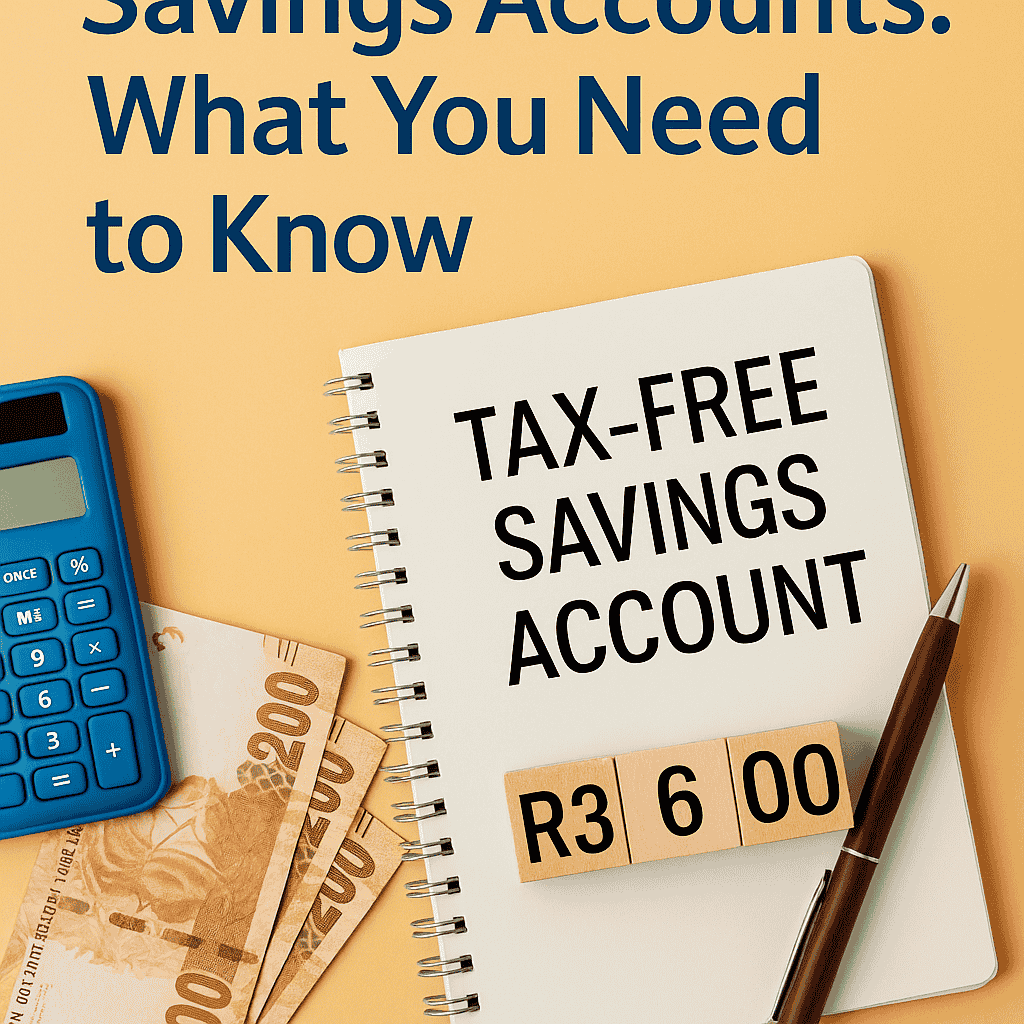
Tax-Free Savings Accounts (TFSA) – What is a TFSA? A Tax-Free Savings Account (TFSA) is a type of investment account that allows you to save and invest without having to pay tax on the interest, dividends, or capital gains you earn. Introduced by the South African government to encourage savings, TFSAs offer a fantastic opportunity to grow your money without the burden of taxation on the growth. Since its introduction in March 2015, many financial institutions in South Africa have been offering these accounts, and they’ve become increasingly popular due to their tax benefits. When you make contributions to your TFSA, all earnings (interest, dividends, and capital gains) are exempt from tax. What Are the Limits for TFSAs? Annual Contribution Limit: The annual limit for contributions to a TFSA is R36,000. This means you can contribute up to R36,000 in one tax year (1 March to 28 February). Contributions exceeding this limit are subject to a penalty of 40% on the excess amount. Lifetime Contribution Limit: The lifetime limit for contributions to your TFSA is R500,000. Once you hit this limit, no further contributions can be made to your TFSA. However, you can still benefit from the growth on your existing investment. No Carry Over: If you do not contribute the full R36,000 in one year, the unused portion does not roll over to the next year. For example, if you contribute only R30,000 in a given year, the remaining R6,000 cannot be carried over to the next tax year. Multiple Accounts: You can open multiple TFSAs across different financial institutions. However, the annual contribution limit of R36,000 applies to the total contributions across all your TFSA accounts. Be sure to keep track of your total contributions across all accounts to avoid exceeding the limit. How to Avoid Exceeding the Limits Track Your Contributions: Keep track of the amount you contribute throughout the year. The total amount contributed across all TFSAs (even if you have multiple accounts) cannot exceed R36,000 in one tax year. No Carry Over: The annual contribution limit does not roll over to the next year. Any unused portion of the annual limit is forfeited. Family Accounts: If you open a TFSA for your child, be aware that any contributions you make count towards their annual and lifetime contribution limits. Take Responsibility: Be proactive in managing your contributions by regularly reviewing your statements and keeping track of your investments. This will ensure you don’t unintentionally exceed the annual limit. Seek Help if Needed: If you’re unsure about how to manage your contributions or if you’re approaching the limit, it’s always a good idea to consult with a financial advisor or tax professional. They can help guide you in staying compliant and ensuring you’re making the most of your tax-free savings account. What Happens If You Exceed the Contribution Limits? If you exceed your annual or lifetime contribution limit, SARS will impose a penalty of 40% on the excess amount. This penalty will be calculated on the amount that exceeds the limit. For example, if you contribute R40,000 in a year, which is R4,000 above the annual limit of R36,000, SARS will charge a penalty of 40% on that excess R4,000. The penalty will amount to R1,600 (R4,000 x 40%). Can You Apply for a Penalty Waiver? Yes, you can request a waiver for certain penalties, including those related to Income Tax, which encompasses penalties on investments like TFI accounts. This can be done through an application for remission. If you exceed the contribution limit and incur a penalty, you can request a waiver of the penalty. SARS provides a process for remission (waiver) of penalties, which can be done through an application for remission via the SARS eFiling platform. To request remission of the penalty, you will need to demonstrate that you have remedied the non-compliance, such as by submitting any outstanding tax returns. Once you’ve addressed the non-compliance, you can then submit a request for remission. SARS grants a waiver at their discretion. Benefits of a Tax-Free Savings Account Tax-Free Growth: The main benefit of a TFSA is the tax-free growth of your savings. All interest, dividends, and capital gains are exempt from tax. Flexibility: You can withdraw money from your TFSA at any time without paying tax on the withdrawal. However, be mindful that any money you deposit back into the account counts as a new contribution and may count towards the annual limit. Ideal for Long-Term Goals: A TFSA is a great tool for building long-term savings. It allows your money to grow without being taxed, making it an excellent way to save for retirement or any future financial goals. Conclusion: Tax-Free Savings Accounts offer an excellent opportunity to grow your savings without the tax burden. By keeping track of your contributions and staying within the annual and lifetime limits, you can ensure that you avoid any penalties. If you’re unsure or need help managing your TFSA contributions, don’t hesitate to seek professional advice to help you optimise your savings strategy.
I’m Paying Too Much Tax on My Salary – When Will I Get It Back from SARS?
I’m Paying Too Much Tax on My Salary – When Will I Get It Back from SARS? This is a common concern for many salaried employees. You look at your payslip each month and wonder, “Why is so much tax being deducted?” It can be frustrating, especially when you feel that your employer isn’t accounting for all the possible deductions that could reduce your tax burden. The question then arises: will SARS ever give any of that tax back? 🧾 Why You Pay PAYE South Africa’s tax system uses Pay-As-You-Earn (PAYE), which means your employer deducts tax from your salary each month based on SARS’s tax tables. This is designed to ensure that you don’t owe a large lump sum of tax at the end of the year. However, sometimes you may feel like too much tax is being deducted, especially if your employer hasn’t factored in some of your personal deductions, which could lower the amount of tax you owe. In the PAYE system, your employer takes care of the tax calculations for you, but they only have access to the information they’re given. For example, if you’re making contributions to a retirement annuity or have medical expenses that exceed what’s covered by your medical aid, these may not be accounted for when calculating your tax at the source. If you have more than one employer, each employer only works out the PAYE based on the salary they pay you. However, SARS will aggregate the income and workout the tax on the aggregated income. ✅ I’m Paying Too Much Tax on My Salary – Will You Get a Refund? The good news is that, yes, you may be entitled to a refund when you submit your annual tax return — typically between July and January. The refund usually occurs if one of the following applies: Overpayment of PAYE: If you’ve paid more tax than necessary during the year, you’re eligible for a refund when you file your tax return. Unaccounted deductions: If your employer hasn’t included deductions like retirement annuity contributions, medical expenses, or other eligible tax credits, you can claim these on your tax return, which could result in a refund. Some common scenarios in which you’re more likely to receive a refund include: Contributing to a retirement annuity (RA): Contributions to an RA are tax-deductible, which means they reduce your taxable income. Medical expenses not covered by your medical aid: These expenses may qualify for tax credits, reducing your tax liability. Travel allowance: If you receive a travel allowance and have kept a valid logbook, you can claim deductions for business travel. Donations to SARS-approved charities (Section 18A): Donations to registered charities are tax-deductible, which can further reduce your taxable income. It’s important to note that if SARS finds that your employer under-deducted PAYE throughout the year, you may owe money instead of getting a refund. 💡 How Salaried Employees Can Reduce Tax Fortunately, there are several strategies available to reduce your overall tax burden and potentially increase your refund. Some practical and legal options include: Contribute to a Retirement Annuity (RA): You can deduct up to 27.5% of your taxable income (up to R350,000 per year) by contributing to an RA. This directly reduces the amount of tax you owe to SARS. Claim Medical Expenses: If you’ve paid out-of-pocket medical costs for yourself or your dependants that aren’t covered by your medical aid, you may be able to claim additional medical tax credits. Logbook for Travel Claims: If you receive a travel allowance, you can only claim deductions for business travel. Ensure you maintain a valid logbook that tracks your business-related trips. Without a logbook, you won’t be eligible for these deductions. Donate to Section 18A Charities: Donations to qualifying charities are tax-deductible, with a limit of 10% of your taxable income. Work with a Tax Professional: If you have multiple income sources, investments, or rental income, it’s a good idea to consult with a registered tax practitioner. They can help you maximise your refund, ensure compliance, and reduce your liability. ⏱️ I’m Paying Too Much Tax on My Salary- When Will I Get the Refund? If SARS owes you money and your return isn’t flagged for review or audit, the refund will typically be paid within 1–3 weeks after the assessment is completed. However, if your tax return is flagged, it could take longer. 👥 Final Thought I’m Paying Too Much Tax on My Salary – what are my options? It’s not just about how much you earn — it’s about how well you plan. Understanding the tax system, keeping track of your deductions, and planning ahead can ensure that you don’t overpay. If you’re unsure about your tax situation or want assistance in reviewing your deductions, chat to us. We can help you navigate the system and ensure that you get the maximum benefit from your tax return. Reach out to us today for expert advice on your tax planning. Let us help you get the most out of your salary and reduce the stress of overpaying.
Smartest Tax Strategies for Doctors: How to Reduce Your Tax Liability in +27South Africa
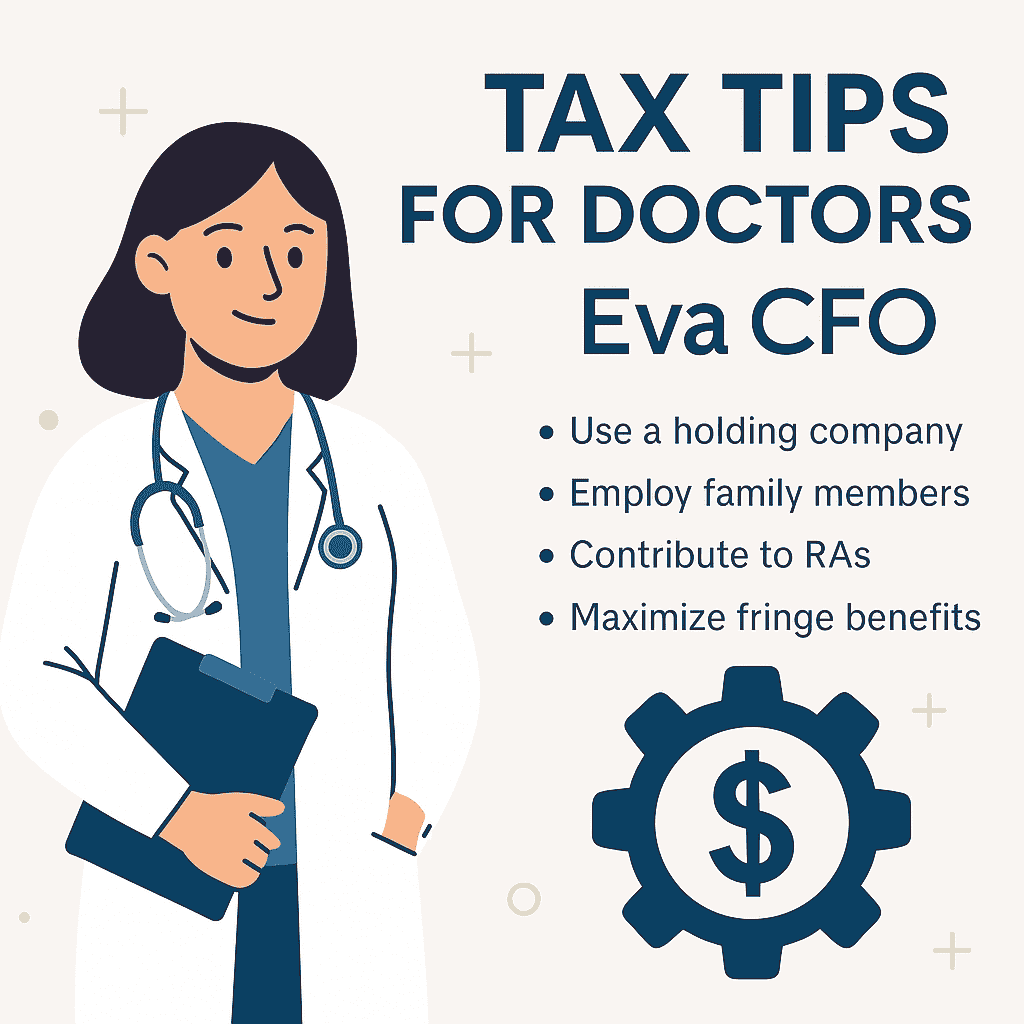
Smartest Tax Strategies for Doctors Running a medical practice or earning income as a doctor in South Africa comes with its own unique financial challenges — and opportunities. While your focus is on patient care, it’s important to ensure that your tax affairs are structured in a way that protects your income and helps you build long-term wealth. Here are some practical, Smartest Tax Strategies for Doctors, whether they’re running their practice through a company or working as an associate or contractor. ✅ 1. Structure Your Practice Through a Company If you’re earning income independently (outside of a salary from a hospital or employer), consider operating through a private company (Pty) Ltd. The corporate tax rate is 27%, which may be lower than your personal marginal tax rate. You can claim business-related expenses and retain earnings within the company. You gain flexibility in how and when to withdraw profits (salary, dividends, or retained earnings). ✅ 2. Claim Legitimate Business Expenses Doctors often miss out on deductions simply because they don’t keep track. As a company or sole proprietor, you can deduct: Office rent or room hire Medical supplies and consumables Reception/admin staff salaries Software, licensing & billing platforms (e.g., Medemass, Healthbridge) Professional indemnity insurance CPD costs, course fees, and HPCSA/SAMA memberships Marketing costs and website hosting 📌 Tip: Keep all invoices and ensure expenses are directly related to your practice. Also, ensure the invoices are compliant with the VAT Act ✅ 3. Use a Company-Owned Vehicle Strategically If you drive between locations or do house calls, a company-owned vehicle can be a useful tool: The company claims depreciation, fuel, insurance, and maintenance. SARS will impose a fringe benefit tax if there’s personal use, but you can reduce it with a logbook and proper structure. ✅ 4. Pay Yourself a Balanced Salary + Dividends Rather than taking everything as salary, consider: A reasonable and optimum monthly salary (subject to PAYE). Declaring dividends on retained profits (subject to 20% Dividend Tax).There must be a sweet spot (balance) between salary and dividends. This hybrid structure can be more tax-efficient than taking a large salary alone. ✅ 5. Maximise Retirement Contributions You can contribute up to 27.5% of taxable income (capped at R350,000/year) to retirement funds and claim a tax deduction.This includes: Pension or provident funds Retirement annuities (RA) ✅ Bonus: The company can contribute on your behalf and deduct it as an expense. SARS will impose a fringe benefit tax if the company payr the RA. ✅ 6. Use a Holding Company (for Growth-Oriented Doctors) If you own multiple practices, want to invest in property, or plan to expand your income streams, a holding company structure can offer: Asset protection from risk in your operating practice Tax-free dividend movement between companies Centralised wealth building and future succession planning ✅ 7. VAT Registration: Yes or No? If your medical practice earns more than R1 million in 12 months, VAT registration is compulsory. But even below that, voluntary registration may help if: You incur high VAT on expenses Your clients (e.g. medical aids or companies) are VAT vendors ⚠️ General medical services to individuals are exempt from VAT, so assess carefully. ✅ 8. Hire Family Members (Properly!) If your spouse or adult child helps with admin, marketing, or bookkeeping, the company can pay them a reasonable salary, which: Is a tax-deductible expense Helps spread the tax load (as they might fall in a lower tax bracket) Must be legitimate and justifiable to SARS ⚖️ A Word on Compliance All these strategies must be implemented legally and with proper documentation. SARS is tightening enforcement and expects: Clear records and supporting documents Proper payroll and PAYE compliance Logbooks for travel claims and benefit tracking 👩⚕️ Final Thoughts The key to the Smartest Tax Strategies for Doctors and reducing tax liability as a doctor is not tax avoidance but tax efficiency. With proper planning, structure, and guidance, you can:✅ Keep more of what you earn✅ Build long-term wealth✅ Stay fully compliant If you’re unsure whether your current setup is working for you or you’d like to explore smarter options, we’d be happy to assist. 📩 Contact us today for the Smartest Tax Strategies for Doctors or a personalised tax planning session — especially if you’re a growing practice or considering a structural change.
Freelancer Tax Deductions Guide

Freelancer Tax Deductions Guide – Introduction Freelancers and independent contractors enjoy the freedom of being their own boss, but with that freedom comes the responsibility of managing their taxes. Unlike salaried employees, freelancers don’t have tax automatically deducted from their income, making tax planning crucial. One of the best ways to reduce your tax liability is by understanding and utilising tax deductions. This guide will walk you through essential deductions that can help you keep more of your hard-earned money. Common Tax Deductions Available Freelancers and independent contractors can deduct many business-related expenses. Below are some key deductions to be aware of: 1. Business Expenses Any expense necessary for running your business can typically be deducted. Examples include:✅ Office supplies (pens, notebooks, printer ink, etc.)✅ Business software and subscriptions (accounting software, Adobe Suite, Zoom, etc.)✅ Website hosting and domain registration✅ Marketing and advertising costs 2. Travel and Transportation If you travel for business, you may be able to deduct related expenses, such as:✅ Mileage on your personal vehicle for business-related trips (keep a logbook!)✅ Airfare, accommodation, and meals for business trips✅ Taxi, Uber, or rental car costs 3. Home Office Deduction If you work from home, you may qualify for a home office deduction. The space must be:✅ Used exclusively for business✅ Your primary place of workDeductible expenses include a percentage of rent, utilities, and home internet costs. 4. Education and Training Investing in your skills is tax-deductible if it’s related to your business. This includes:✅ Online courses and workshops✅ Professional training and CPD✅ Books and subscriptions to industry-related materials 5. Communication Expenses Since most freelancers rely on digital communication, expenses like these may qualify:✅ Business-related phone calls and data plans✅ Internet service used for work✅ Business software subscriptions (e.g., project management tools) How to Keep Track of Your Expenses Keeping organized records is critical for maximizing tax deductions and avoiding issues with SARS. Here’s how to stay on top of your expenses:✔ Keep all receipts – Digital or physical copies of receipts are crucial proof of business expenses.✔ Use expense-tracking apps – Apps like Xero, Zoho Books, QuickBooks, or Wave can automate expense tracking.✔ Maintain a spreadsheet – Categorizing your expenses regularly prevents last-minute stress during tax season.✔ Separate business and personal finances – Having a dedicated business account makes tracking deductions easier. The Impact of Deductions on Your Tax Bill Tax deductions lower your taxable income, which means you pay less tax. For example: The more deductions you claim (legitimately), the less tax you owe. However, it’s essential to track them correctly and ensure they comply with SARS regulations. What’s Not Deductible? Not everything you spend money on qualifies for a deduction. Here are some non-deductible expenses:❌ Personal groceries and household bills❌ Non-business entertainment expenses❌ Personal clothing (unless it’s specific protective gear required for your work)❌ Fines or penalties❌ Any unverified expenses (SARS may require proof of business-related use) How Eva Financial Solutions Can Help Understanding tax deductions can be overwhelming, especially if you’re juggling multiple clients and projects. That’s where Eva Financial Solutions comes in! 💡 We help freelancers and independent contractors:✔ Maximize their tax deductions✔ Ensure compliance with SARS regulations✔ Keep financial records clean and organized✔ File tax returns correctly and on time Conclusion Tax deductions are an essential tool for freelancers and independent contractors to reduce their tax burden. Staying organized, keeping records, and understanding what qualifies as a deduction can save you thousands of rands. For expert guidance and stress-free tax filing, contact Eva Financial Solutions today! Let us help you keep more of your hard-earned money while staying fully compliant. 📞 Get in touch now for a consultation! 🚀
Strategies to Reduce Your 2025 Tax Bill

Smart Strategies to Reduce Your 2025 Tax Bill: As the tax year draws to a close, it’s the perfect time to explore ways to optimise your finances and reduce your tax liability. Whether you’re a business owner, a high earner, or planning for retirement, here are actionable steps to help you minimise your tax bill and set yourself up for financial success in 2025. 1. Maximize Medical Aid Credits Taxpayers can claim deductions (or tax credits) for contributions to medical aid schemes. This applies whether you’re a principal member or paying on behalf of someone else, like a family member. The credits increase with the number of beneficiaries: R364 for the taxpayer or first beneficiary R728 for the taxpayer and one dependant R246 for any additional beneficiary Ensure all contributions are accurately reported to take full advantage of these credits, even when you are paying on behalf of someone else, like a family member 2. Contribute to Retirement Annuities Contributions towards pension, provident funds, or retirement annuities can significantly reduce your taxable income. You’re allowed to deduct up to 27.5% of your remuneration or taxable income (whichever is greater), capped at R350,000 per tax year. Maximising these contributions not only secures your retirement but also reduces your current tax liability. However, remember that withdrawals from these funds are taxable on a sliding scale basis with the first R500 000 exempt. 3. Utilize Tax-Free Savings Accounts (TFSAs) TFSAs are a powerful tool for building wealth tax-free. Contributions are capped at R36,000 per year and R500,000 over your lifetime. All interest, dividends, and capital gains earned in these accounts are tax-exempt. Pro Tip: Invest in growth assets like equities to maximize the compounding effect, ensuring you get the most from this tax-free opportunity. 4. Claim Home Office Expenses If you’ve been working from home, certain expenses can be deducted from your taxable income, provided you meet specific criteria: Your employer must permit you to work from home. You must spend more than 50% of your working hours in your home office. The office space must be exclusively used and properly equipped for work. Expenses like rent, utilities, and internet costs can be partially deducted if they relate directly to your home office. 5. Take Advantage of Donations Deductions Donations to registered public benefit organizations (PBOs) are tax-deductible up to 10% of your taxable income. Ensure the organization provides you with a Section 18A certificate to claim this deduction. 6. Optimize Investment Income and Capital Gains Diversify Your Portfolio: Avoid holding excessive cash or bonds, as interest income is taxed at your marginal rate (up to 45%). Consider equities for tax-efficient growth. Capitalise on Capital Gains Exclusions: Individuals get an annual exclusion of R40,000 on capital gains. Only 40% of gains above this threshold are taxable. Primary Residence Exclusion: The first R2 million of a capital gain on your primary residence is excluded from CGT, reducing potential liabilities when selling your home. 7. Utilise Business Expense Deductions For freelancers, sole proprietors, or rental property owners, business-related expenses can be deducted from taxable income. Common deductible expenses include: Interest on bond payments Rates, taxes, water, and electricity Depreciation on business assets Advertising and maintenance costs Keep detailed records to substantiate these deductions. 8. Foreign Income Exemptions If you’ve worked abroad for more than 183 days in a 12-month period, the first R1.25 million of your foreign income may be exempt from tax. Ensure proper documentation to claim this exemption. 9. Vehicle and Wear & Tear Deductions Travel Claims: If you use your vehicle for work, maintain a logbook to claim deductions on travel expenses. Wear and Tear: Depreciate work-related equipment, like laptops or tools, over their useful life as stipulated by SARS. Assets under R7,000 can be fully written off in the year of purchase. 10. Consider Sinking Funds and Endowments High-income earners can cap their income tax at 30% and capital gains tax at 12% using endowments and sinking funds. These products also simplify estate planning by allowing direct beneficiary nominations. Final Thoughts With careful planning and strategic financial decisions, you can significantly reduce your 2025 tax bill. Whether it’s optimising retirement contributions, leveraging tax-free accounts, or claiming legitimate deductions, each step you take brings you closer to financial efficiency. Need personalized help with your taxes? Get in touch with us today!
SARB Repo Rate Cut: How It Affects You

SARB Repo Rate Cut: How It Affects You The South African Reserve Bank (SARB) has reduced the repo rate by 25 basis points, bringing it down to 7.5%. This is the third consecutive rate cut by the Monetary Policy Committee (MPC), and while it was widely expected, SARB Governor Lesetja Kganyago struck a cautious tone regarding future cuts. So, what does this mean for businesses, consumers, and the broader economy? Let’s break it down. Impact on Borrowers and Homeowners A lower repo rate directly affects the interest rates commercial banks charge their customers. With the prime lending rate now at 11%, borrowers with home loans, vehicle finance, and personal loans could see slightly lower repayments. However, the impact on existing loans might not be significant enough to drastically improve affordability, but for those looking to take out new loans, this cut offers some relief. Inflation and Spending Power With South Africa’s inflation rate sitting comfortably within SARB’s target range of 3-6%, the recent Consumer Price Index (CPI) data showing 3% for December 2024 suggests that inflationary pressures are currently under control. Lower inflation, coupled with lower interest rates, should theoretically increase consumer spending power, stimulating economic activity. Business Growth and Investments For businesses, lower interest rates mean cheaper financing costs. Entrepreneurs and corporations looking to expand may find it slightly easier to access credit at reduced costs. However, given the cautious stance of SARB on further rate cuts, businesses may need to balance growth plans with potential future economic risks. What Should Consumers and Businesses Do? Homeowners: Consider using the lower rates to pay off debt faster rather than taking on new loans. Investors: With inflation contained, investment opportunities may improve, particularly in sectors benefiting from lower borrowing costs. Businesses: Now may be a good time to reassess financial strategies and plan for potential changes in interest rates later in the year. While the repo rate cut is a positive move, it is not an indication of a long-term easing cycle just yet. SARB remains cautious about future cuts, meaning South Africans should take advantage of the current lower rates but prepare for economic uncertainties ahead. For now, this decision offers some relief to consumers and businesses, but smart financial planning remains key in navigating South Africa’s economic future. What’s needed to apply for a bond (Mortgage: ) When applying for a bond, you’ll need to provide various personal and related entity documents to ensure a smooth application process. Here’s a list of the key documents required: Personal Documents: To get started with your bond application, you’ll need to provide the following personal documents: Application Form: Bank Completed form with all relevant details. Statement of Assets and Liabilities: A summary of your financial position. Statement of Income: Proof of your regular income sources. Copy of ID: A valid identification document. Proof of Residence: A document verifying your current residential address. Last 6 Months Bank Statements: Both your personal and business bank statements. Most Recent ITA34: Tax assessment form for the past two years. Income Confirmation Letter: A letter from your employer or client confirming your income. Related Entity Documents: If you’re applying as part of a business or related entity, you’ll need to provide additional documentation: Shareholding Confirmation Letter: If applicable, a letter confirming ownership or shareholding. Management Accounts: Up-to-date accounts detailing your business’s financial health. Most Recent Signed Financials: The latest signed financial statements for your business or entity. Need assistance securing a home loan? Contact us today for expert guidance!
Generosity and Compliance: What You Need to Know About Donations Tax in South Africa

How does the donations tax in South Africa work? The festive season often brings joy, gifts, and a generous spirit. But did you know that your thoughtful gestures—whether it’s a cash gift, a luxury car, or even an interest-free loan—can catch the attention of the South African Revenue Service (SARS)? In South Africa, donations tax applies to gifts exceeding specific thresholds, and SARS is now cracking down on compliance. With updated rules and stricter reporting requirements, understanding the implications of your generosity is more important than ever. What Is Donations Tax? At its core, a donation is a transfer of value motivated purely by generosity, such as gifting money or property without expecting anything in return. SARS views donations above a certain value as taxable, with the donor responsible for the tax. Effective 1 November 2024, SARS has introduced new requirements for declaring donations. The updated Donations Tax Declaration Form (IT144) now demands: A detailed description of the donation, such as the make, model, and condition of a car. Supporting documents, like proof of payment or a valuation report for non-cash donations. What Are the Tax Rates? Here’s how the tax applies: Individuals: The first R100,000 donated per year is exempt. Beyond that: 20% tax applies to donations up to R30 million. 25% tax applies to donations exceeding R30 million. Companies and Trusts: Casual gifts up to R10,000 per year are exempt. Common Exemptions Certain donations are exempt from tax, including: Spousal Donations: Transfers between spouses are tax-free. Maintenance Contributions: Support for a family member’s basic needs is exempt, provided it’s reasonable and can be substantiated. Public Benefit Contributions: Donations to qualifying charities or public benefit organisations. What Happens if You Don’t Comply? Failing to declare and pay donations tax can result in penalties and interest. If the donor doesn’t pay by the end of the month following the donation, both the donor and recipient become jointly liable for the tax. Special Focus: Loans to Trusts SARS is particularly focused on interest-free or low-interest loans made to trusts. The difference between the actual interest charged and the official market rate is treated as a deemed donation, potentially creating ongoing tax liabilities. How to Stay Compliant To avoid any pitfalls: Understand the Rules: Know when donations tax applies and the exemptions available. Provide Accurate Information: When completing the IT144 form, include all required details and attach supporting documents, like property valuations or proof of payments. Consult a Tax Professional: If you’re unsure, seek expert advice to ensure you’re fully compliant. Final Thoughts Generosity is a beautiful thing, but it comes with responsibilities. By understanding the tax implications of your donations and staying compliant, you can ensure that your acts of kindness don’t lead to unexpected penalties or liabilities. Need help navigating the complexities of donations tax? Our team of tax professionals is here to guide you every step of the way. Contact us today for expert assistance!