
Is SARS always right? What if I do not agree with their assessments?

Is SARS always right? What if I do not agree with their assessments? Many of us see SARS as that horrible master who just wants to take our money at every opportunity possible, and it’s money they didn’t even work for. Sometimes you look at an assessment and you even wonder what they are trying to do. Maybe they even issue an assessment and go on to recover monies owed by you by issuing an instruction to your bank to deduct whatever they feel is due to them. If this happens, what are your options? Once the Revenue Authority issues an assessment on your tax return and they have issued a notification for the tax payable or refundable under your tax return, you can: Choose to accept the assessment Ask for reasons as to how SARS arrived at the issued assessment. This must be done within 30 days from the date of the assessment You can choose to lodge an objection within 30 business days from the date the assessment is issued or within 30 business days after receiving the reasons on how SARS arrived at its assessment SARS has a detailed guide on how you may file a notice of objection. However, I would advise that you consult a professional tax practitioner to assist you: Ascertain if SARS’ assessment is correct Determine if the relevant tax laws were applied correctly Correctly lodge a Notice of objection on your behalf Tips to get your objection right: Ensure that you have all the supporting documents for the amounts you are objection to justify your reasons for objecting to the assessment. (For example, if you believe SARS missed your Medical Aid contributions, then you must have the supporting medical aid certificate when you lodge your objections) Ensure that you indicate the tax type(s) and tax years that you which to proceed and object Ensure that you select the items to dispute against by selecting the relevant tick boxes Ensure you have selected the correct source codes/ transaction code of the disputed item is displayed. It is important that you get the correct source codes as SARS may reject the Objection based on the fact that you put an incorrect code even though the objection is on valid grounds. Watch that you distinguish between dispute amount and requested amount. Again, SARS may turn back your objection if the distinction between these two is not shown. The disputed amount is the amount that has been charged for interest or penalties for late payment are displayed. The requested amount indicate what you believe the amount should be. This is important because if this amount and the amount above are the same, SARS will reject the NOO on that technicality. An objection that does not comply with the rules of objections and the Tax Administration Act may be disallowed. In terms of the rules, you may submit a revised objection within 20 days of receipt of the notice of invalidity by SARS If the objection is disallowed, you may elect to accept the outcome or appeal against the decision. If you elect to appeal the outcome, then you may elect to take the Alternative Dispute Resolution (ADR) route or the litigation route (via the tax board if less than R1 million or the tax court in all other cases). You can initiate ADR by indicating that you wish to make use of the ADR process in your notice of appeal. Within 30 business days of your notice of appeal, SARS will inform you whether the matter is suitable for an ADR process. The ADR process must be concluded within 90 days. If the dispute is resolved between you and SARS, it must be recorded and signed by you and a SARS representative. A settlement agreement must be approved by a senior SARS official. SARS will issue, where necessary, a revised assessment to give effect to the agreement reached by ADR. If the dispute is not resolved by ADR you may continue to appeal to the Tax Board, if the tax in dispute is below R1000 000, or the Tax Court. Again, I want to stress out the need to consult a professional Tax Practitioner to assist you with this process. if you have gone through all these processes and have now won your case against SARS (where SARS issued unnecessary assessment without proper foundation), may you recover wasted costs incurred (consultations with lawyers and tax practitioners or accountants fees) through the unnecessary conduct of SARS officials? The decision to use the services of professionals rests on the taxpayer. However, it goes without saying that the complexity of tax laws and regulations renders it necessary for one to consult with tax lawyers, accountants and tax practitioners. Currently, there is no formal authority covering whether taxpayers can recover their costs from SARS. But, practices in other tax jurisdictions allows taxpayers to recover damages in cases where they have suffered financial losses due to the conduct of the revenue authorities. In South Africa damages may be awarded by a competent court if the taxpayer can prove that he/she suffered financial loss as a result of the conduct of SARS. Leave a message Subscribe now:
What does a SARS completion/verification letter mean?

What does a SARS completion/verification letter mean? What is a verification: Being selected for an audit and verification are two different processes. With a verification, SARS is doing a face-value verification of the information declared by the taxpayer on the declaration or in a return. This involves the comparison of the information on the return against the financial and accounting records and/or other supporting documents. All this is to ensure that the declaration/return is a fair and accurate representation of the taxpayer’s tax position. Remember, in terms of the Tax Administration Act, the onus is on the taxpayer to provide supporting documentation in order to prove that the deductions and information on their declaration are reasonable, fair and accurate. Who can be selected for verification: Any taxpayers can be selected for a verification process for the purpose of proper administration of tax. The selection can also be done on a risk basis. What should I do if I am selected for verification: SARS will notify the taxpayer if they have selected them for verification. The letter issued will state what the taxpayer must do or provide to SARS. The letter will also notify the taxpayer to check their tax return and to make any corrections if there are any discrepancies on their tax return. The taxpayer will be given 21 business days from the date of the letter in which to provide the supporting documents and schedules. The supporting documents or schedules can be submitted via eFiling or manually at the SARS branch near you. During the verification, you can expect to get another letter requesting additional information if the relevant material initially supplied was not sufficient to finalize the verification. If you are due for a refund, you may not get this until the verification process is finalised. What happens if you do not respond to the verification: If you choose not to respond, SARS may: Issue a second letter reminding you to submit relevant information Issue a final request for relevant information If you still do not respond, a SARS official will contact you telephonically and request that you submit the necessary relevant material within 5 business days. Should you still not respond, SARS may raise an assessment based on information readily available or obtain from a third party. NB: It is always best to respond to all queries as quickly as possible. There is a possibility of penalties and interests SARS verification finalised with changes meaning A SARS “Verification Finalised with Changes” letter typically means that SARS has completed the verification process of your tax return and found discrepancies or issues that required adjustments. Here’s a breakdown of what this could mean for you: Verification Process Complete: SARS has reviewed the information and documentation you submitted to verify the accuracy of your tax return. Changes Made: During this review, SARS identified errors, omissions, or discrepancies in your return. They have made adjustments to correct these issues. Impact on Tax Liability: The changes may affect your tax liability or reduce your refund. This means you might owe additional taxes, be entitled to a refund, or have a change in the amount of the refund you were expecting. Next Steps: The letter should outline the specific changes made and any actions you need to take. This might include paying additional taxes, receiving a refund, or providing further documentation. Appeal Process: If you disagree with the changes, the letter will usually provide information on how to dispute the findings or request a review. What to expect when verification is completed: You will receive a completion letter notifying you of the verification outcome. If all goes well, this letter will normally notify you that no adjustments have been made. In that case, SARS will not be making adjustments to their assessments. If you are due for a refund, it should be paid out in 7 working days (provided you have no tax debt due or outstanding tax returns from prior years). If you were the one owing SARS, the amount due will remain payable. You can contact us for: Ta submission Help with Objection of assessment Help with the interpretation of your assessment Help with the interpretation of your statement of account Tax return submission (corrections or new submissions) Has SARS selected you for a verification process? Stay informed and respond promptly! A SARS verification is a review of your tax return against your supporting documents to ensure everything is accurate. If selected, you’ll need to submit all relevant material within 21 business days to avoid penalties. Whether it’s understanding your verification outcome or handling adjustments made by SARS, don’t get caught off guard. Need assistance with objections, interpretations, or tax return corrections? Contact us today for expert guidance. Join Eva CFO on Telegram for the latest insights: Eva CFO on Telegram. Leave a message Subscribe now:
Can I deduct home office expenses?
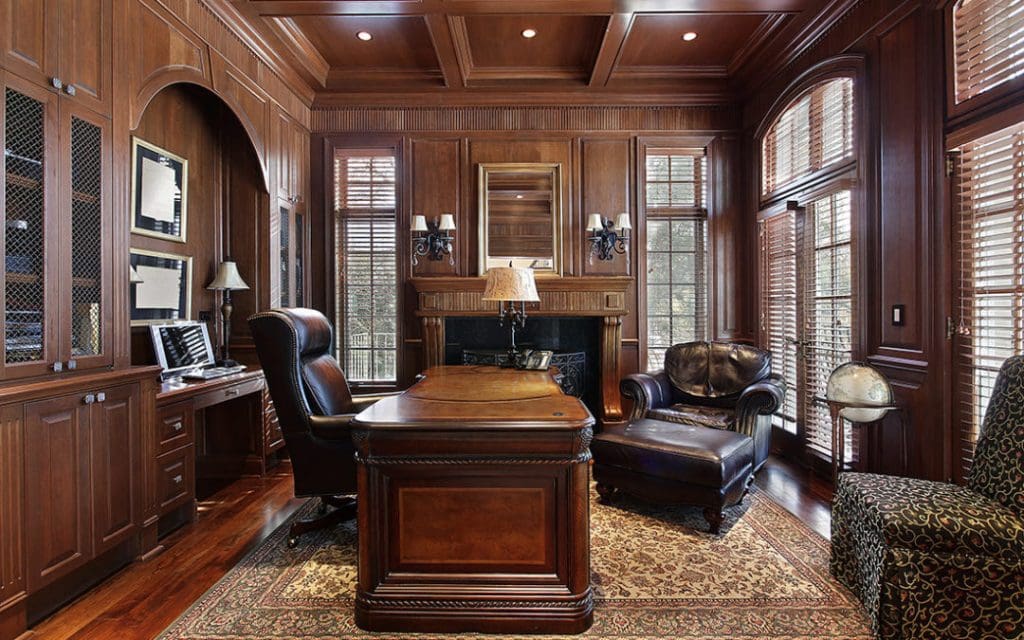
Can I deduct home office expenses? These days the work culture has changed. Since lockdown was introduced. Some companies had to close shop and some employees were required to work from home. Also and in general, the world is changing and so is the way people work and interact. Many people, like myself, prefer working from home. Working from home has become a normal thing. The GIG economy will also make working from home just another normal thing. Luckily, SARS allows home office deductions if certain conditions are met. However, it is important to note that SARS often than not flag returns with home office expenses for audit. So it is important that one correctly and accurately claims these deductions. It is worth understanding the rules around home office expenses as they are allowed under certain circumstances. Not everyone may end up deducting home office expenses. Having said this, it is important to point out that the situation is different for self-employed people or what we would term sole proprietors or freelancers who work from home. These taxpayers can automatically deduct their home office expenses. These taxpayers (self-employed, sole proprietors, freelancers) do not need to work through the tight conditions required for one to be able to deduct home office expenses. They simply have to include their home office expenses with the local business, trade and professional income on their tax return. What is required to be able to deduct home office expenses? The employer must allow the taxpayer to work from home. So, you can’t just work from home because you want to. Your employer must give you express permission to work from home. The taxpayer must spend more than half of their total working hours working from their home office. The part of the home in respect of which a claim is submitted must be occupied for purposes of a “trade”, as defined in section 1. So, in essence, there should be a specific part of the home that is used exclusively for this purpose. As an example, a specific set aside office must be kept aside for the trade. A taxpayer meeting with a client in the bar area of their home may not qualify for these deductions. Building from the point above, the part that is so occupied must be specifically equipped for purposes of the trade. So, it is important that space/office must be specially fitted with the relevant instruments, tools and equipment required for the taxpayer to perform their work. The part must be regularly and exclusively used for purposes of the trade. As an example, taxpayers who earn a commission but who spend the majority of their time on the road visiting clients and performing their work at the client’s premises do not qualify for home office expense deduction. What expenses can be deducted? First, one needs to check the taxpayers’ remuneration structure to see if they are: A commission earner, that is, takes more than 50% of their total remuneration from the commission or some other variable form which is based on their performance. A normal salaried employee with variable payments/commission making up less than 50% of their total remuneration. The commission earners can deduct the following: Rent Interest on bond Repairs to premises Rates and taxes Cleaning Internet Wear and tear and All other expenses relating to their house as well as other commission related business expenses (such as telephone, stationery, repairs to printers, maid answering phone in your absence etc) The salaries employee with variable payments/commission making up less than 50% of their total remuneration can deduct: Rent of the premises Interest on the bond Cost of repairs to the premises and other expenses in connection with the premises Rates and taxes Cleaning Internet, Wear and tear and all other expenses relating to their house only. How to calculate the home office deduction: One would need to work out/measure the total square meterage of the office in relation to the total square meterage of the house. This is then converted into a percentage. The percentage is then used to apportion the expenses that can be used for home office deductions. Example: Mrs taxpayer is a software engineer who works for Corona Company Pty Ltd. Her remuneration consists of a salary only (no commission.) Her Company allows her to work from home three days per week. Mrs taxpayer has a separate office at home, fitted out with a computer and printer, which she uses exclusively for her software engineering job. Her office is 30 square meters, and the floor space of her entire home (including the office) is 300 square meters. During the tax year, she incurs the following expenses: – R120, 000 interest on a bond – R36, 000 rates and electricity – R36, 000 paid to the cleaner – R5, 000 roof repairs – R12, 000 cell phone expenses Based on the above information, Mrs taxpayer qualifies for home office deduction. Based on the space occupied by her home in relation to the entire house, the apportionment ratio is 10% (30/300). Therefore her home office deduction is 10% x (120 000 + 36 000 + 36 000 +5 000) = R19 700. Her cell phone costs will not be deductible since she is not a commission earner. Will I qualify for a home office deduction for the 2021 tax season? The 2021 tax season started 1 March 2020 and ends 28 Feb 2021. To be able to claim home office expenses you would need to have met the conditions specified earlier. You will also need to have ended up working from home for more than six months of the tax year. That is, you would have worked from home until at least the end of September 2020. Need help claiming your home office expenses or finding someone who can deal with SARS on your behalf? Leave a message Subscribe now: